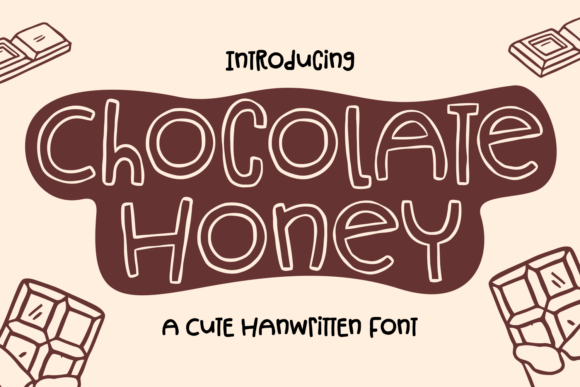
Chocolate Honey: A Whimsical Font for Creative Expression
Embracing the Charm of Handwritten Typography
Typography plays a pivotal role in how content is perceived, and with the rise of digital design, handwritten fonts have carved a niche of their own. Chocolate Honey stands out as a prime example of this trend, offering a natural, handcrafted aesthetic that feels both intimate and expressive. Unlike rigid, machine-generated typefaces, Chocolate Honey mimics the irregularities and fluidity of real handwriting, giving designers the ability to evoke emotion and familiarity in their work.
Its dual-style design — featuring a bold solid and a delicate outline — allows for creative layering and visual contrast. This versatility makes it suitable for a wide range of design scenarios, from digital illustrations to print media. Whether used in branding, social media assets, or educational materials, Chocolate Honey adds a touch of personality that resonates with audiences across age groups and industries.
Design Characteristics That Set Chocolate Honey Apart
At first glance, what distinguishes Chocolate Honey is its organic flow and textured stroke variation. Each letter is carefully crafted to mimic the pressure and rhythm of a pen on paper. The font’s baseline bounce, subtle ligatures, and natural ligature transitions enhance its authenticity, making it feel less like a typeface and more like a personal note from the creator.
- Two Complementary Styles: The solid and outline versions can be used separately or layered together for a dimensional effect.
- OpenType Features: Includes stylistic alternates, contextual ligatures, and punctuation variations for enhanced typographic control.
- Comprehensive Character Set: Supports multiple languages and special symbols, making it globally applicable.
These features make Chocolate Honey more than just a pretty font — it’s a functional tool that adapts to various design needs while maintaining its distinct charm. Designers can experiment with spacing, color, and texture to create unique compositions that stand out in a sea of generic typography.
Applications Across Industries and Mediums
One of the most compelling aspects of Chocolate Honey is its adaptability. It performs exceptionally well in contexts where warmth, friendliness, and approachability are key. Here are some notable use cases across different domains:
- Branding and Packaging: Particularly effective for boutique brands, bakeries, children’s products, and lifestyle brands aiming for a personal touch.
- Educational Materials: Ideal for creating engaging worksheets, classroom posters, and children’s books that feel inviting and familiar.
- Web and Social Media Design: Enhances digital content with a human feel, especially in quote graphics, banners, and promotional visuals.
- Invitations and Greeting Cards: Perfect for crafting custom cards that feel handwritten and heartfelt.
Because of its playful nature, Chocolate Honey also works well in animations and motion graphics, where the outline version can be animated independently of the solid for dynamic visual effects. Its expressive quality makes it a favorite among illustrators and graphic designers looking to inject life into their compositions.
Why Chocolate Honey Resonates With Audiences
In a world dominated by digital perfection, there’s a growing appreciation for imperfection — the slight tilt of a letter, the variation in stroke weight, and the organic rhythm of handwriting. Chocolate Honey taps into this emotional response by offering a typeface that feels genuine and relatable.
Its aesthetic aligns well with the current design trends favoring authenticity and minimalism. Users often report that designs using Chocolate Honey feel more personal and trustworthy, which is especially valuable in marketing and communication where emotional connection plays a crucial role.
Moreover, the font’s accessibility across platforms and design software ensures that it can be integrated seamlessly into both print and digital workflows. Whether you're using Adobe Illustrator, Canva, or Figma, Chocolate Honey is ready to enhance your next project with its expressive character.
Considerations for Effective Use
While Chocolate Honey is incredibly versatile, it’s important to use it thoughtfully to maintain readability and visual balance. Here are some best practices to consider:
- Pairing with Other Fonts: For body text or longer paragraphs, pair Chocolate Honey with a clean sans-serif or serif font to maintain legibility.
- Limiting Usage: Due to its decorative nature, it’s best suited for headlines, titles, and short text blocks rather than lengthy body copy.
- Testing Across Sizes: Ensure the font remains legible at smaller sizes, especially for print or mobile applications.
Designers should also be mindful of file formats and export settings when using Chocolate Honey in web or app environments. Proper embedding and licensing are essential to ensure legal compliance and consistent rendering across devices.
Conclusion Through Application
Chocolate Honey is more than just a font — it’s a storytelling tool that brings warmth and personality to any design. By blending the charm of natural handwriting with modern typographic features, it opens up a world of creative possibilities. Whether you're designing a children’s book, a brand identity, or a social media campaign, Chocolate Honey offers a unique way to connect with your audience on a more human level.
As design continues to evolve, the demand for expressive, emotionally resonant typography will only grow. Fonts like Chocolate Honey not only meet this demand but also inspire designers to think beyond the conventional and embrace the beauty of imperfection. In a digital age that often feels cold and impersonal, Chocolate Honey reminds us of the simple joy found in the handwritten word.