Wormhole: A Typeface Between Time and Glitch
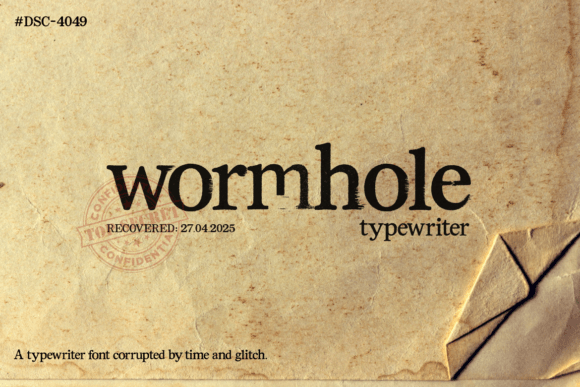
WORMHOLE TYPE isn’t just a font—it’s a message from a fractured timeline. Rescued from the fragments of a forgotten machine, this typewriter-inspired display font fuses the tactile imperfection of 1940s analog print with the haunting glitches of a corrupted digital future. Every glyph feels like it’s been torn through space-time—frayed at the edges, half-erased, and struggling to hold its form.
What Makes Wormhole Unique?
At first glance, Wormhole appears to be a distressed, mechanical font. But beneath its surface lies a deliberate design that blurs the line between past and future. Each character mimics the uneven ink bleed of a 1940s typewriter ribbon while simultaneously showing signs of digital degradation—like a signal breaking through static or a memory fading with time.
It’s not just about aesthetics. Wormhole is crafted for visual storytelling. Whether you're designing a book cover that hints at lost knowledge, a game UI that feels like a relic of a fallen civilization, or a zine that rejects clean, modern typography, Wormhole brings a layer of narrative depth that few fonts can match.
For Designers and Creatives
Experienced designers will appreciate Wormhole for its texture and tone. It’s not meant to be used everywhere—it’s a statement font. Think of it as the visual equivalent of a distorted guitar riff: powerful in the right context, overwhelming in the wrong one.
- Use it in headlines to create visual tension.
- Pair it with clean sans-serif fonts for contrast.
- Layer it with glitch effects to enhance its digital decay.
For those working on editorial design, experimental branding, or dystopian-themed projects, Wormhole offers a rare combination of historical texture and futuristic glitch.
For Indie Game Developers
Indie game creators often rely on visual identity to set their games apart. Wormhole’s aesthetic makes it ideal for UI elements, logotypes, and in-game text that need to feel like part of a broken world. Imagine a post-apocalyptic RPG where the font used in mission logs looks like it was printed on a damaged terminal—Wormhole delivers that kind of authenticity.
It works especially well in games with a retro-futuristic or cyberpunk setting. The font’s irregularity adds a sense of realism to interfaces that might otherwise feel too polished or artificial.
For Educators and Students
Typography students can study Wormhole as an example of hybrid design—how analog textures can be digitally reconstructed and reimagined. It’s a great case study in how modern type design can borrow from historical printing techniques while embracing digital imperfection.
For educators, Wormhole can be a tool to spark discussions about the evolution of type, the role of imperfection in design, and how fonts can carry narrative weight beyond their legibility.
For Entrepreneurs and Small Business Owners
If you’re launching a brand that leans into alternative aesthetics—like underground art spaces, experimental music labels, or niche publishing—Wormhole can help establish a strong visual identity. It’s not for every business, but if your brand thrives on mystery, rebellion, or nostalgia, this font could be a compelling choice.
Consider using it in limited contexts, like event posters or product packaging, where its impact is maximized without overwhelming readability.
How to Use Wormhole Effectively
Because of its heavy texture and low legibility at small sizes, Wormhole is best used as a display font. Here are a few practical applications:
- Print Media: Use it on limited-run zines or posters where visual impact matters more than long-form readability.
- Web Design: Apply it sparingly in hero headers or section titles to create a sense of tension or intrigue.
- Motion Graphics: Pair it with glitch transitions or analog film effects to enhance its thematic strength.
Designers should also consider the color and background when using Wormhole. High contrast helps preserve legibility, while textured backgrounds can enhance its analog feel.
Comparing Wormhole to Similar Fonts
There are many distressed fonts on the market, but Wormhole stands out due to its dual identity—part typewriter, part digital decay. It sits somewhere between fonts like OCR A (with its mechanical roots) and more modern glitch fonts that lean heavily into digital fragmentation.
What makes Wormhole unique is its balance. It doesn’t lean entirely into one style. Instead, it exists in the liminal space between analog warmth and digital coldness—perfect for projects that want to evoke both nostalgia and uncertainty.
Is Wormhole Right for You?
Ask yourself these questions to determine if Wormhole fits your project:
- Do you need a font that tells a story beyond its words?
- Are you designing for a theme that includes decay, nostalgia, or dystopia?
- Will the font be used at large sizes where texture matters more than readability?
- Are you okay with a font that demands attention and shouldn’t be overused?
If you answered yes to most of these, Wormhole may be a perfect fit. If you're looking for a versatile workhorse font or something for long-form text, you may want to look elsewhere.
Final Thoughts
WORMHOLE TYPE is more than a font. It’s a design artifact, a narrative device, and a stylistic choice that says something about the creator’s intent. Whether you’re a game designer building a broken world, a typographer exploring the edges of legibility, or a brand builder crafting a unique visual voice, Wormhole offers a compelling mix of texture, tone, and timelessness.