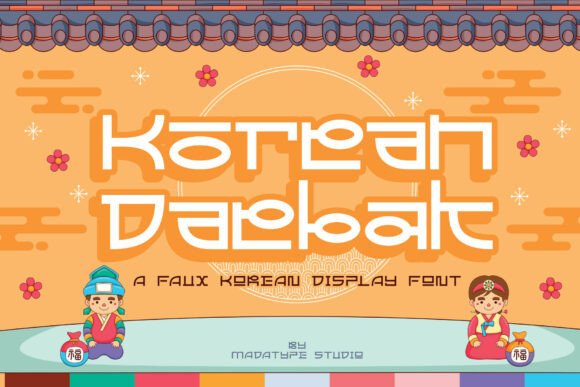
Korean Daebak: A Bold Design Statement for Modern Creatives
In today's design landscape, typography is more than just a vehicle for text—it's a powerful tool for storytelling, brand identity, and visual impact. Among the growing list of specialty fonts, Korean Daebak stands out as a faux Korean display typeface that captures the bold essence of Hangeul without being a traditional Korean font. Its blocky, stylized structure is both eye-catching and culturally resonant, making it a go-to option for designers aiming to add East Asian flair to their work.
What Makes Korean Daebak Unique?
Unlike conventional fonts that prioritize legibility and uniformity, Korean Daebak leans into visual drama. Each character is meticulously designed to reflect the spirit of Hangeul while maintaining its own stylized identity. This faux Korean font doesn't replicate the technical structure of the Korean alphabet but instead draws inspiration from its visual rhythm and cultural weight. The result is a typeface that feels both familiar and distinctive, blending traditional aesthetics with contemporary design sensibilities.
One of its most practical features is its PUA encoding, which allows full access to its character set without the need for advanced design software. Whether you're using basic tools or industry-standard applications, integrating Korean Daebak into your project is seamless and straightforward.
Meeting the Needs of Today’s Designers
The modern creative environment demands flexibility, speed, and authenticity. Graphic designers, illustrators, and branding professionals are constantly seeking fonts that offer both visual impact and functional ease. Korean Daebak fits neatly into this workflow by providing a strong typographic presence ideal for high-impact applications like logotypes, posters, packaging, and apparel design.
- Logos: Perfect for businesses looking to highlight Korean cultural elements, such as Korean BBQ restaurants or K-pop merchandise brands.
- Poster Design: Its bold structure commands attention, making it ideal for event posters, album art, or promotional materials.
- Merchandise: From T-shirts to mugs, Korean Daebak adds a unique visual punch to wearable and collectible items.
Design Trends and Cultural Influence
Global design trends continue to embrace cultural authenticity and visual diversity. With the rise of K-culture—spanning music, fashion, food, and film—there's a growing demand for design elements that reflect Korean aesthetics without requiring fluency in the language. This is where Korean Daebak shines. It allows designers to tap into the visual language of Korea without the constraints of a true Hangeul font, offering a stylized alternative that's accessible and expressive.
Moreover, the shift toward personalized and niche branding has increased the need for standout typography. In a market saturated with minimalist and sans-serif fonts, a bold, stylized typeface like Korean Daebak offers a refreshing contrast that can help a brand stand out on digital and physical platforms alike.
Practical Applications Across Industries
From a practical standpoint, Korean Daebak is versatile enough to be used across multiple creative fields. Here are a few real-world applications where this font can make a meaningful difference:
- Food & Beverage: Use it in restaurant logos, menu headers, or promotional signage for Korean-inspired eateries.
- Apparel & Merchandise: Ideal for streetwear, fan merchandise, and limited-edition products that want to evoke a Korean pop culture vibe.
- Entertainment & Media: Great for album covers, concert posters, or YouTube thumbnails that aim to capture the energy of K-pop or Korean cinema.
- Personal Projects: Blog headers, social media graphics, and digital art benefit from its strong visual presence and cultural resonance.
Why Korean Daebak is Gaining Attention
The growing interest in Korean Daebak aligns with broader shifts in design preferences and consumer expectations. Audiences today are more visually literate and drawn to unique, expressive content. As brands seek to differentiate themselves in competitive markets, they increasingly rely on unconventional design choices—including typography—to communicate identity and emotion.
In addition, the accessibility of design tools and the rise of independent creators have democratized the design process. More people are creating content, and they need tools that are both powerful and easy to use. The PUA encoding in Korean Daebak ensures that even novice designers can incorporate it into their work without technical hurdles, contributing to its rising popularity.
Choosing the Right Context for Korean Daebak
While Korean Daebak is a strong and expressive font, it’s best used in contexts where visual impact is the priority. It’s not ideal for long-form text or body copy due to its stylized structure. Instead, it excels in headlines, titles, and short bursts of text where its bold presence can shine.
Designers should also be mindful of cultural sensitivity when using fonts inspired by non-Latin scripts. Korean Daebak is a design homage rather than a linguistic tool, so it’s best suited for projects where visual style is more important than language accuracy. When used thoughtfully, it can enhance a design without misrepresenting the culture it draws from.
Looking Ahead: Typography and Design Evolution
Typography continues to evolve alongside technology, culture, and user behavior. As digital platforms become more visual and globalized, the demand for culturally inspired, high-impact fonts like Korean Daebak will likely continue to grow. Designers who understand how to use such fonts effectively will be better positioned to create work that resonates across borders and audiences.
Whether you're a seasoned professional or an independent creator, Korean Daebak offers a compelling way to infuse your projects with boldness and cultural flair. It's more than a font—it's a design statement that reflects the evolving nature of visual communication in a connected world.